
A letter to those who are “TOO NICE”
1. “NO” — LEARNING TO SAY “NO”
The first word of self-protection and self-awareness
From a very early age, human beings instinctively learn to set boundaries. Around 14 months old, children begin to say “NO” as a way to express independence and protect themselves from discomfort. This is a crucial milestone in psychological development: children learn how to refuse before they learn how to agree, laying a solid foundation for autonomy and self-esteem later in life.
Erik Erikson described the stage of “Autonomy vs. Shame and Doubt” (ages 1–3) as a period in which children develop independence. When a child refuses food, resists wearing clothes chosen by adults, or says “NO,” it is a sign of self-exploration and self-assertion. If children are excessively forced or controlled, they may develop self-doubt and struggle to establish healthy boundaries later in life.
Meanwhile, in Vietnam, mealtime often looks quite different: grandparents, parents, or caregivers chase children around, coaxing, scolding, or force-feeding them—not based on the child’s actual needs, but on adult expectations. Exhausting, isn’t it?
2. WHY DO VIETNAMESE PEOPLE FIND IT HARD TO SAY “NO”?
Cultural factors
In Vietnam, refusal is often perceived as rude, disrespectful, selfish, or disruptive to harmony. The deeply rooted mindset of “living for the collective,” shaped by generations of war and hardship, has normalized self-sacrifice as a virtue.
This cultural pattern also contributes to intergenerational psychological trauma, where many people feel guilty for setting boundaries or feel ashamed when they are rejected.
Traffic as a metaphor for life
Look at traffic to understand how people live.
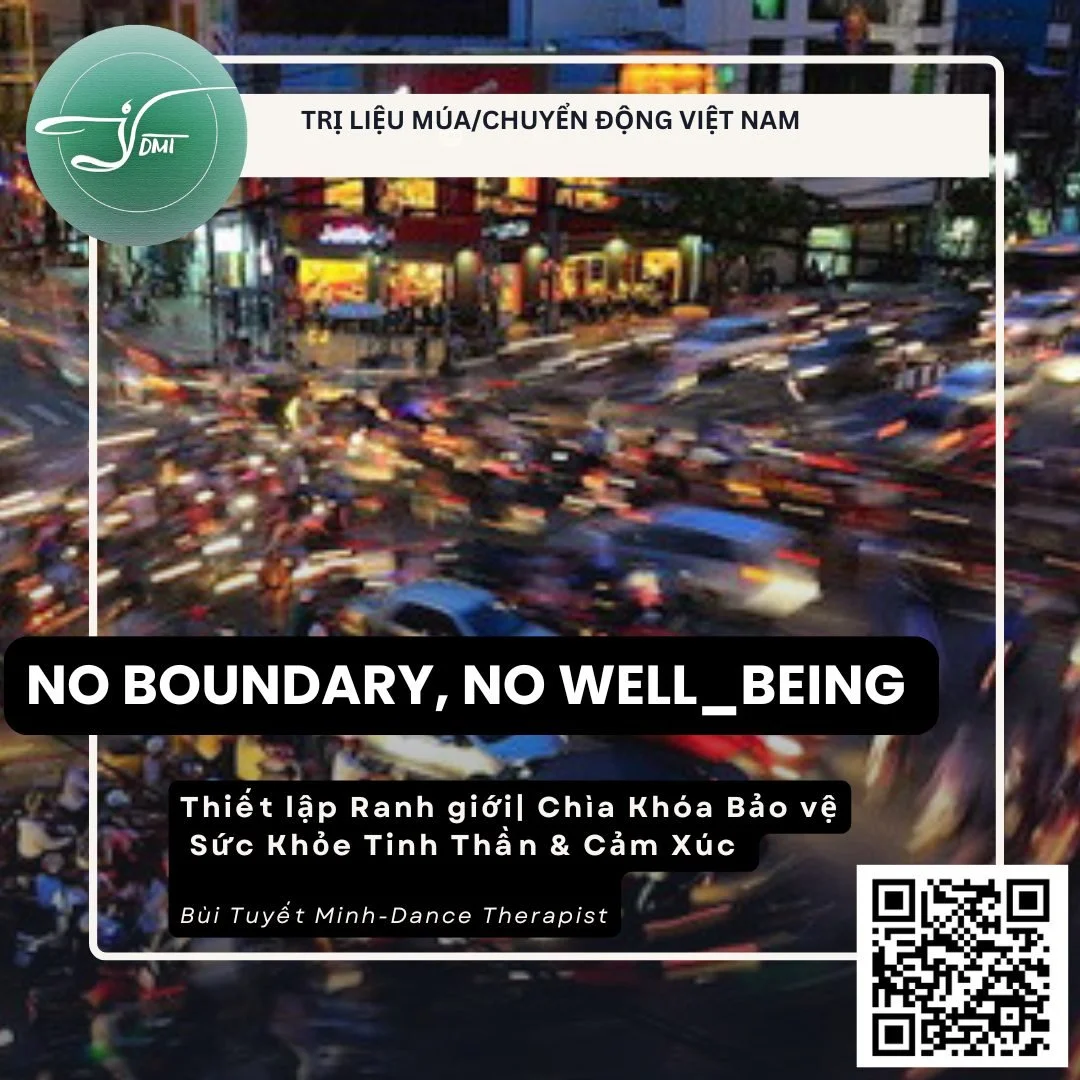
Vietnamese traffic resembles Brownian motion in physics—chaotic, yet governed by unspoken rules. Lanes may be unclear, but people continuously adjust to avoid collisions (or at least minimize them).
This reflects a characteristic psychological pattern:
We become accustomed to having our personal space invaded
Over time, we lose the instinct to protect personal boundaries
In relationships, Vietnamese people tend to adapt rather than set boundaries, to endure or ignore rather than confront directly.
The result: many people experience emotional overload, chronic stress, or irritability without understanding why.
3. CONSEQUENCES OF NOT HAVING SAFE BOUNDARIES
Emotional imbalance
Constantly accommodating others leads to exhaustion, stress, and even depression—especially among women and postpartum mothers.
Toxic relationships
Without clear limits, people are more likely to be taken advantage of, feeling controlled or powerless to resist.
Disconnection from oneself
Fear of saying “NO” in order to be accepted gradually erodes the ability to recognize and honor one’s own needs and desires.
4. HOW TO BUILD SAFE BOUNDARIES
The body is our first teacher in recognizing boundaries:
Feeling uncomfortable when someone stands too close is a natural signal that a boundary has been crossed
Stepping back in response to danger is an innate protective reflex
Strong, grounded movement helps cultivate decisiveness when setting limits with others
Dance/Movement Therapy offers an effective way to practice boundaries naturally—by listening to the body, recognizing personal space, and expressing limits through action, not just words.
