
DANCE/MOVEMENT THERAPY IN PALLIATIVE CARE FOR CHILDREN WITH CANCER
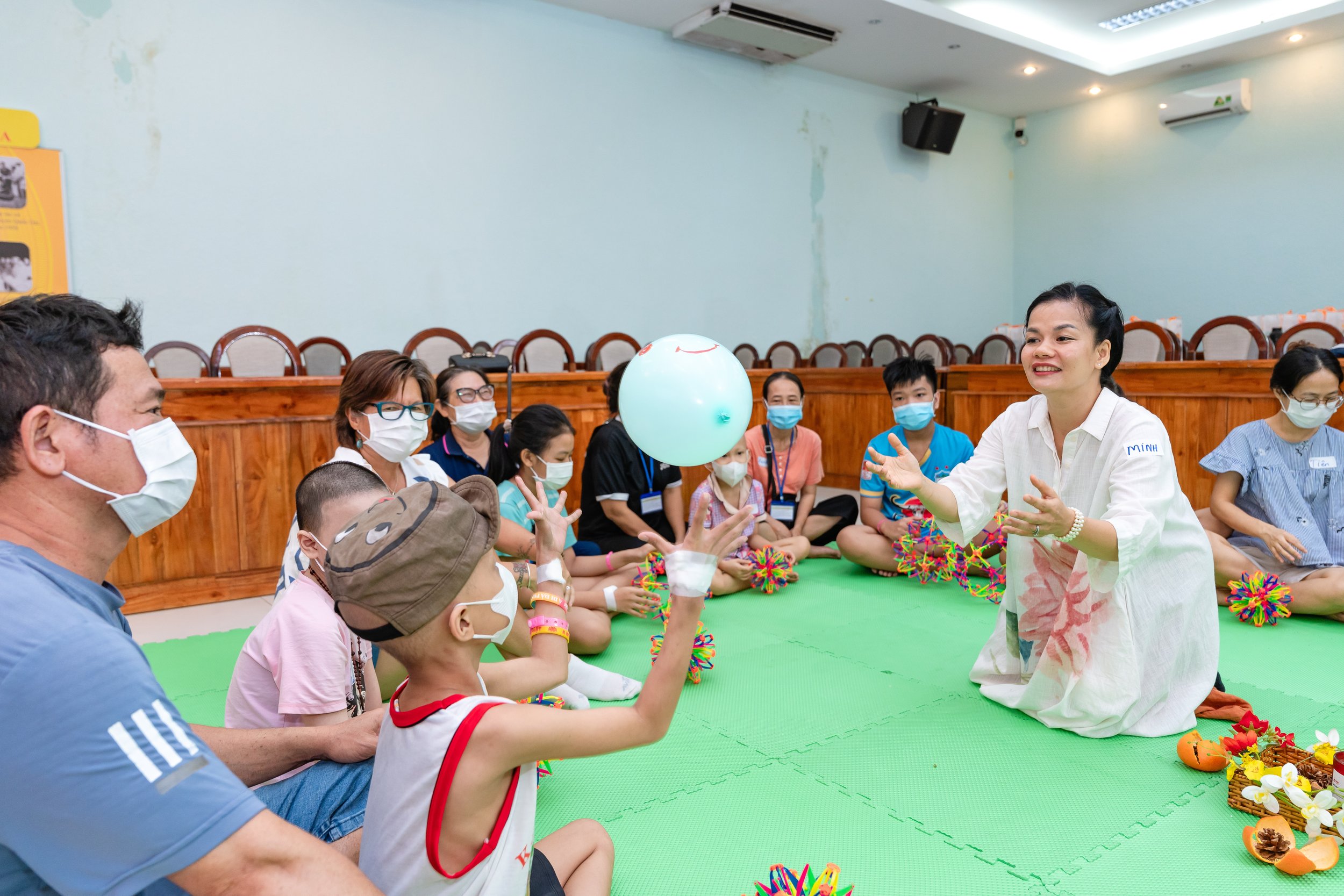
In a hospital, the body of a child with cancer gradually becomes familiar with injections, tests, medications, and countless procedures they have no choice over. There are days when children cry out in pain, only to become completely exhausted. Parents grow weary; doctors and nurses who witness this suffering day after day can also experience burnout.
And yet, they are still children growing up. They still want to play, move, laugh, imagine, and talk about the things they dream of. Dance/Movement Therapy (DMT) can offer another way of caring for these deeply human needs.
DMT is a form of psychotherapy that uses movement and embodied experience as part of the therapeutic process. It is not a dance class or recreational activity in a hospital. Depending on each child’s health and needs, the therapist uses movement, rhythm, imagery, imagination, and the therapeutic relationship to support children in sensing their bodies, expressing emotions, regulating stress, and connecting with others.
For young children, this can be especially meaningful because not every experience can be put into words. A child may not yet know how to talk about fear, pain, or the feeling of losing control, but the body continues to communicate through the ways they withdraw, reach out, move closer, keep their distance, or seek a particular rhythm. Within a safe therapeutic relationship, movement becomes a language through which children can be seen and heard.
I remember sessions when the children transformed movement into rainbows, superheroes, or images that existed only in their own worlds. A body once associated with medication and pain suddenly became alive again. They laughed, played, created, and spoke about dreams that were still very much alive. They also had choices: how to move, how much to participate, and when they needed to rest.
In a treatment process where so many decisions about their bodies are beyond their control, these seemingly small choices can help children regain a sense of agency over themselves.
After one therapy session, a young doctor said to me, “This is the first time I have seen the children being called by name, smiling so brightly, and coming alive like this.” The doctor also shared how exhausting it could be to witness the children crying out in pain and becoming completely drained day after day.
That moment reminded me that cancer does not affect a child alone. The entire family, as well as those caring for the child, are also walking through this journey.
Parents can therefore participate in DMT as well. A touch, two hands moving together, a gentle sway, or a moment of shared laughter can bring the parent–child relationship beyond conversations about medication, tests, and treatment.
Therapeutic goals may include self-expression, emotional regulation, adaptation, social communication, and interaction between the child and their caregivers.
Palliative care does not mean stopping treatment, nor is it only for the final days of life. It can accompany medical treatment, helping to reduce suffering and improve the physical, psychological, social, and spiritual quality of life for children and their families.
DMT does not replace medical treatment. Instead, it cares for other dimensions of a child’s experience: their relationship with their body, emotions that may be difficult to put into words, their need for choice, play, imagination, and connection with the people they love.
Cancer treatment today should not ask only how long a child can live. We also need to ask:
How will they live those days?
Through the Chạm để Thương (Touch to Heal) Project, we hope that even amid long days of medication and treatment, every child can still have moments to simply be a child — to be called by name, to laugh, to play, to express themselves, to be close to their parents, and to speak about their dreams.
Because even when the body is living with illness, there is still a living, vibrant body within each child — a colorful imagination, and a life that continues to live, grow, and hope.
